Policies and SOPs must reflect how the organization actually works
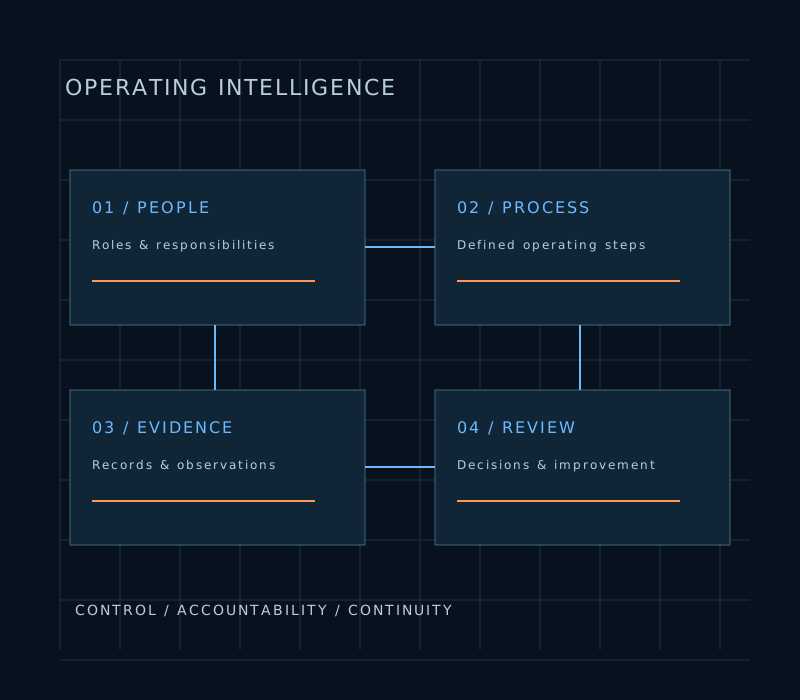
A generic safety or security manual may look complete yet fail when employees need to make a decision. Effective documentation defines the purpose of a control, who is accountable, when a procedure applies, the steps to follow, the records to create and how exceptions are escalated. Raosson develops documentation from interviews, operating evidence, site risks and management-approved responsibilities.
Possible assignments include fire safety policies, security management plans, visitor and key-control procedures, emergency response plans, evacuation instructions, incident reporting, inspection schedules, workplace violence prevention arrangements and corrective-action workflows. A document register and version-control convention help prevent outdated instructions from circulating.
Draft, validate, approve and implement
The drafting process begins with a document inventory and gap review. Stakeholders then review roles, legal and technical references, operational feasibility and the evidence required for compliance or assurance. Controlled drafts should identify document owners, approval authorities, effective dates, revision history and review intervals.
Implementation matters as much as authorship. Staff should receive role-specific orientation, supervisors should test whether procedures can be followed and management should monitor records and exceptions. Where the procedure depends on equipment or trained responders, those dependencies must be made explicit.
Client ownership and document control
Raosson prepares and advises; the client approves its own internal policies and remains responsible for legal and operational implementation. Lahore organizations can request a scoped documentation programme with an agreed deliverable register, review cycles and handover criteria.